
Freelancing, Fertility and Feeling F**king Tired

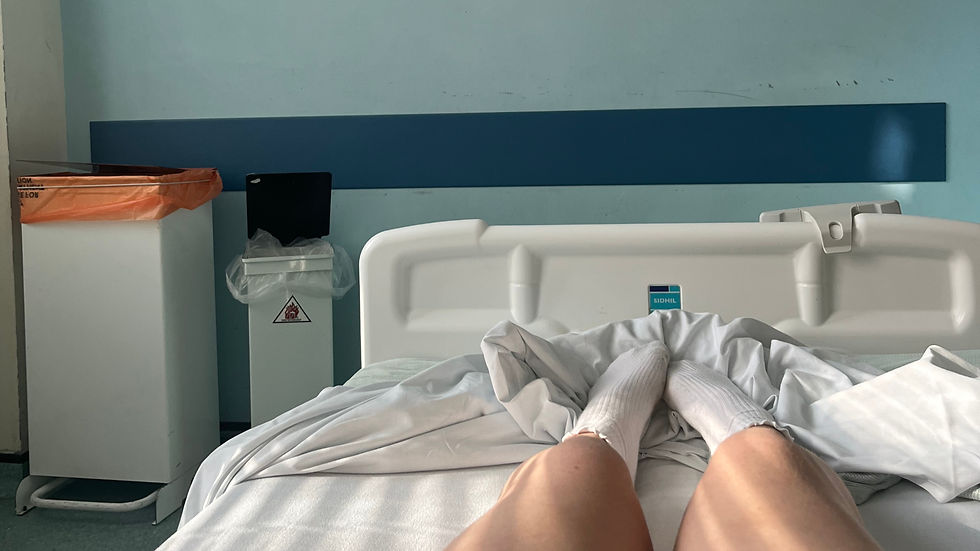
There is a particularly awful feeling that comes with not being able to do the thing you love in the way you used to.
In 2024, I was working what I can only describe as my dream job: a ten-week residency in a primary school, collaborating with friends and a group of brilliant young people. It was joyful, exactly the kind of work I’d been manifesting for myself since graduating drama school.
And yet, every day I came home exhausted. Not ‘a bit tired’, I’m talking swollen eyelids, body-aching fatigue. I’d finish at the school, drag myself home, and collapse into bed.
Want a quick catch-up on a Thursday afternoon? Forget it.
Sending those emails I promised myself I’d get to? No chance.
This quickly spiralled into self-doubt. I was thinking:
‘If I’m too lazy to commit to the things I love, what am I going to do?’
The strange thing was, life was good. I was living with my best friends. We had started Flos Collective. I’d joined the LayLow team. I was freelancing in a creative scene I cared about, in a city I love. I was doing the thing I had spent years working towards.

So why did it feel like I couldn’t be bothered?
One thing about freelancing is that it requires stamina. It’s much more than just the visible work: the performances, the events, there is the invisible labour too: the admin, the endless applications, the emails, the generation of new ideas.
There is a certain sorta energy you need to sustain it. And I didn’t have it.
I was panicking:
How am I going to apply for more work?
What happens when this contract ends?
Am I being a good collaborator?
When will I have time to develop my practice?
There were moments when I genuinely wondered if I should give up on creative work entirely. Because surely, if you can’t stay awake past late afternoon, you’re not built for a career that runs on self-motivation and irregular hours?

After months of putting it off, and a gentle but firm nudge from my friend I contacted my GP.
For context, and this is where fertility comes in, my periods had been “abnormal” for a while. When I spoke to my doctor about the exhaustion, mood dips, and other physical symptoms I was experiencing, I was asked:
“Do you think this is to do with your mental health? Depression? Would the pill help?”
As a teenager, I’d experienced extreme vaginal bleeding linked to the pill and had been advised to avoid hormonal contraception. I explained this, but was told my hormones may have changed, so I started taking the progesterone-only pill.
And, to be fair (begrudgingly), it did help.
My mood improved. I felt more like myself. A better friend, more able to do the work to the best of my ability. But after a while, something felt off. It’s hard to explain, I just had a persistent sense that my body wasn’t quite right.
As women we’re taught from a young age to track our bodies: cycles, moods, energy, symptoms. Which is ironic since it feels none of this is taken into medical consideration. And mine was shifting again. The fatigue returned. I had night sweats and extreme brain fog that were both worrying and frustrating. So, despite advice not to, I stopped taking the pill. At that point, I hadn’t had a period in over a year. And when I came off the pill, it didn’t come back.

At first, I waited. (For another year, lol.) Then I panicked.
Disappearing periods are very stressful. I started to create a list of all the possible causes I had heard about from friends and family members: early onset peri-menopause, endometriosis, PCOS thyroid problems and of course infertility were at the forefront of my mind.
In the UK, around one in seven people experience fertility problems. Conditions affecting hormones, thyroid issues, prolactin disorders, PCOS and more can all interfere with ovulation. And many take years to diagnose.
Endometriosis, for example, affects one in ten women. The average time to receive a diagnosis in the UK is nearly nine years. Nine years of being told it’s “probably just period problems” or “I’m sure if you cut out dairy and go for some walks you’ll feel better.”
In early 2025, I called my family GP and burst into tears. Luckily, the doctor I spoke to (a young woman) took me seriously immediately.
“I’m healthy,” I kept saying. “Something is wrong, and I am so f**cking tired.”
What followed was a series of urgent investigations:
Blood tests.
Hospital appointments.
More blood tests.
MRI scans.
A few days later, I got a call.
The doctor says: “Your prolactin levels are extremely high. Now please don’t panic, but the most likely cause is a small tumour on your pituitary gland, which is in your brain.”
Ah yes, pretty casual. Of course, like any Gen-Z, internet-obsessed adult, I went straight to Dr Google and promptly planned my tragic early demise.
(I mean, I was being dramatic but I had to milk it a bit).

Imagine this next part as one of those slightly unsettling AI educational videos about fruit, and what recreational drugs not to mix:
“Hi, I’m prolactin. I’m the hormone that helps you produce milk after you give birth. I’m very useful if you’re breastfeeding. If you’re not… I can be a bit chaotic.
I rise during pregnancy and postpartum. I suppress ovulation and pause your menstrual cycle. But if you’re not pregnant, I make you feel like shit.”
My prolactin was super high, and as a result my periods disappeared. My oestrogen was at an all time low and I had completely lost my libido - which as a 20 something year old was pretty detrimental to my mental health.
High prolactin can be caused by stress, certain medications, thyroid problems, or sometimes by a small benign growth on the pituitary gland called a prolactinoma. That’s what I’ve got, in my case it's minor and fixable - however the fact it took years and a misdiagnosis to get to the cause of my issues is not. And my consultant has said that the effects on my womb won’t be detectable until I try to conceive.
One of the most jarring parts of this experience has been realising how common it is for women’s health concerns to be dismissed. When I started talking to other women, the stories were endless.
The term for this is: “the gender health gap.”
Historically, medicine has treated the male body as the default. Women are underrepresented in research, and female-specific symptoms are less understood. Which means things like fatigue, hormonal disruption, and chronic pain are often explained away. Sometimes those explanations are correct. But often they aren’t, and the time taken to diagnose the real issue can be detrimental to people's physical and mental health.
For a long time, I built my identity around being energetic, generative and excited. It is such a shame that we turn physical symptoms into moral failures, especially as freelance artists. Sometimes the issue isn’t your ambition. It’s your endocrine system. So if something feels off, physically, emotionally, hormonally, don’t gaslight yourself into thinking you’re just not resilient enough.

Book the blood test.
Make the call.
Go to bed at 4:30pm on a Tuesday.
Be honest about what you can manage.
And treat yourself with the same amount of care that you should expect from a health care professional, colleague or friend.
Check in with your buddies, and offer some understanding if they’re more flakey, tired or less inspired than normal. You never know, they might be battling the NHS and their endocrine system at the same time.
*PS: I do believe doctors are doing their best. But we desperately need more research into women’s health, so fewer people have to go through years of confusion and doubt.
Suggested reading
If you want to understand the broader context of women’s health:
Invisible Women — Caroline Criado Perez
Unwell Women — Elinor Cleghorn
Doing Harm — Maya Dusenbery
It's Probably Nothing: Critical Conversations on the Women's Health Crisis (and How to Thrive Despite It) - Naga Munchetty



Comments